
Eating together is an act of love: Mealtimes and inclusion (part two)

Importance of Inclusion
Successful inclusion can be challenging and complex, sometimes because of the characteristics of the child, but more often because of the characteristics of adults.
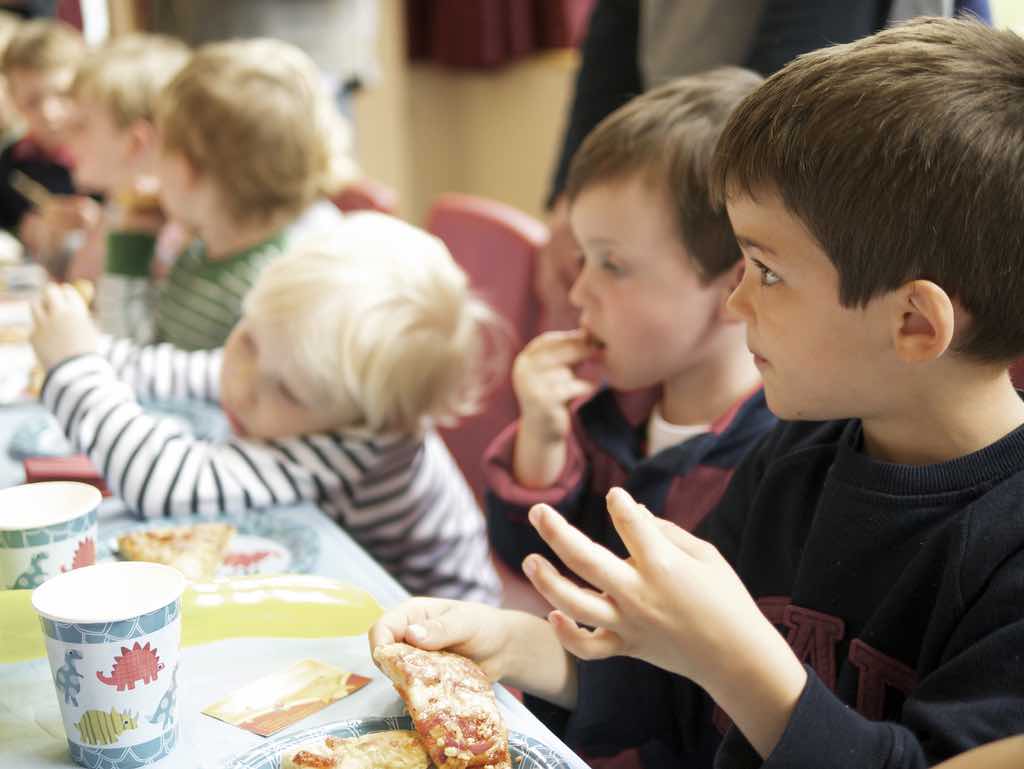
It is important to acknowledge one source of inclusion support – The children around the child. We have to enhance the target- the child’s opportunities for interactions with peers. Mealtimes are a real occasion for children to sit together many times a day and many days a week. Something very special happens in warm inclusive environments with adults who celebrate diversity. We notice that in some environments the most important factor is love for the child. Love is what Antonovsky says would make the experience meaningful.
For the children around the child, the fundamental lesson is to respect all despite diversity. The child is often identified with their impairments or symptoms like vomiting or nausea. I wish to point out the importance of sitting together, despite all the difficulties a child can have.
There are some key factors that promote inclusion. For the PMLD children who have trouble with mealtimes, these are:
-
Adequate assessment (multidisciplinary assessment of swallowing, joint working between GP, GE, educator, nurse and speech therapist). The caregivers need knowledge about what eating difficulties mean, how they can understand what is going on anatomically and physiologically as well as psychologically.
-
Use of appropriate adaptations (sitting in a good wheelchair, using special spoons and plates, sitting close to the adult and the other children and having enough space for the equipment).
-
Adaptations to close the gap between the effects of impairment and potential accomplishments.
-
Collaboration with family: Family members often have valuable information and strategies to convey to educators.
It is essential to work together to make successful inclusion possible. Parents are a very important part of this work. Forging a positive, early bond with parents shapes a productive relationship that lasts throughout the nursery experience. Interaction and good dialogue come up as important element of joyful mealtimes. The golden moments of connection weigh a lot and become a substantial part of a diet.
Focus on the sensory experience
Eating food is an important sensory experience. Different textures are blended together and smashed into a new consistency and texture. Think about it the next time you dine. So many different tastes, textures… We wonder why some children with PMLD eat a kind of porridge with sugar, butter and cinnamon. We wonder why the dinner is blended together so that carrot, chicken and potatoes become the same color. We ask ourselves, would we have enjoyed eating that kind of porridge? Sometimes, caregivers come to me and say that the child no longer has a desire to eat. My first thought is to agree with the child.
Focus on other children’s observations
Professionals in the education system must be concerned with what happens around the mealtime table with other children. These children are usually very attentive to the child who eats differently. In Norwegian, we say that children ‘have eyes in the neck’.
My video recordings from nurseries show exactly that. They show the awareness and attentiveness of the professionals too. They watch the children, describe what happens and use certain words to draw attention back to themselves.
This includes using sentences like:
“Une likes pizza sauce; she is very good at licking”. “It is not so easy for Une to swallow”.
“It is difficult to chew some big pieces. You can”.
“He gets food directly in the stomach. Where is your stomach, Christian?”
Children listen and are satisfied with the answer. They turn back to their own meal.
It is important to answer according to the children’s developmental level.
Focus on the role of the meal
What do we understand by mealtimes? Eat and be quickly finished and satisfied? Sitting together to share food? Sitting together to exchange issues of the day?
Ekholt kindergarten in Rygge/Østfold County has worked systematically on the entire mealtime process. From shopping to preparing to cooking and eating together. The common experience includes everyone, and the child with special needs should be a part of the group.
The parents and caregivers chose the inclusive setting because they know the child so well and primarily because they want inclusivity. The assessment is the basis and they include it in planned sessions. They can choose some of the mealtimes. They can choose some parts of the meal. They can choose the special food that the child likes so much. They can decide not to expose the child to what is most difficult to eat. They can take meals in small groups, in different rooms.
“We are allowed to sit in the kitchen with Une and look at the raisin cookies in the oven,”
a child said and I was so glad because Une was a part of this special arrangement for a very exclusive group of children. They could serve the cookies after lunch. Every child gets a role. Such plans for inclusion deliver a good experience for all children.
The mealtime is a good chance to experience smell and taste, share these sensory moments with others, develop language, name different sorts of food, recall preparation of the meal, speak about likes and dislikes, make associations and tell stories.
In an open and inclusive setting i.e. not under the control of too many rules, children will be more inclined to learn about the unforeseen, surprising moments with interest. The adults will describe what is happening. In some cases the professionals will draw attention to the episode; in other cases, the professionals will not give more attention than necessary. Many of these moments end with big eyes, perhaps laughter. Something new is learned everyday.
Episodes like knocking a bottle on the floor, a glass on the table or even vomiting could go in this category. It is an important skill of the professionals to defuse such episodes. This is easier in a nursery where the mealtimes happen in a relaxed manner, not in a nursery controlled by too many rules, where the children are told: “Sit properly! Eat everything on your plate!” etc.
One of the most important skills in the nursery is for professionals to guide the children in a world based on respectful relationships to each other despite differences. The possibilities for inclusion increase in such open settings.
Inclusion at Home
Because mealtimes are so difficult, some families choose not to eat together with the child with dysphagia. We have to understand, but also help with finding some meals and some textures that can be eaten together in a common family setting.
A mother tells me that her child cannot eat anything because of severe aspiration. The family decided anyway to have her around the table. The girl could smell and look at the siblings while the food pump was switched on. The family found a task for her. Her task was to blow out the matches at the beginning of the meal. Candlelight is an enrichment of the meal table here in Scandinavia. Because of the light phenomenon, it is an important cultural element to decorate the table with candlelight. This became a routine and the girl got a role. Siblings said, “She is the boss of the matches”.
Is this mealtime? Well, we think so.
References
- Antonovsky A. (2012) Helsens mysterium, den salutogene modell. Oslo: Gyldendals Norsk Forlag AS. Birch, L.L., Johnson, S.L. & Fisher, JA. (1995). Young Child 50:71
- Birch, L.L. & Marlin, D.W. (1982). I Don’t Like It; I never tried It: Effects of Exposure on Two-Year-Old Children’s Food Preferences. Appetite 3,353-360
- Christophersen & Hall, C.L. (1978) Eating patterns and associated problems encountered in normal children. Issues in Comprehensive Pediatric Nursing, 3, 1-16
- Comrie J.D. & Helm J.M. (1997) Common feeding problems in the intensive care nursery. Seminars of Speech and Language, 18,239-261
- Heimdahl E., Robertson P. (2005) Matreisen med Aleksandra. Spesialpedagogikk 05 s.38-44
- Heimdahl E., Horgen T. (2011) Fra mating til samspising. Spesialpedagogikk 08. s. 26-33.
- Heimdahl E., Johansen G., Horgen T. (2015) Å spise sammen: Den eldste og mest naturlige inkluderingsarena. Spesialpedagogikk 01. 28-39.
- Heimdahl E. (2015) Klumper i suppa, knuter på tråden … og menyen på bordet. Knappen Nytt 01. s.20-26
- Horgen, T. (2006) Det nære språket. Oslo: Universitetsforlaget.
- Leslie, P. (2015) Worship the dog not the larynx. Dysphagia Cafe Website Nov.10.2015
- Pelchat, M. & Pliner, P. (1986). Antecedents and correlates of feeding problems in young children. Journal of Nutrition Education 18, 23-29.
- Poppes, P. et al. Frequency and severity of challenging behavior in people with PIMD. Research in Developmental Disabilities vol. 31-2010
- Satter, E.M. (1990) The feeding relationship: Problems and Interventions. The Journal of Pediatrics,117,181-189