Eating with your eyes

The puree kitchen
I like to think that running a puree kitchen is a fun adventure. Cooking is creative. Creative activity releases endorphins in the brain and these are the body’s natural feel-good hormones.
Making classic American comfort foods with the emphasis on flavor is the focus of Essential Puree: The A to Z Guidebook. The diet is not boring and tasteless and the patient is happy. The patient’s pleasure in food is important because it promotes well-being in the patient. This is critical to patient and caregiver alike.
Having a good time in the kitchen instead of viewing it as a chore aids with the problem of caregiver burnout. You play some music, you chop your veggies, you make a beautiful puree. The food has flavor. The problem of isolation frequently encountered by caregivers may be eliminated if the caregiver is connecting through the simple process of shopping for food.
I am an author and journalist. In creating Essential Puree, I interviewed healthcare professionals from physicians in many specialties to dietitians and speech pathologists, to aides, caregivers and nurses.
My friend Heidi Pines is a licensed clinic social worker. Heidi has been working in the healthcare sector in Florida for the past twenty years, specializing in geriatric medicine. Heidi says, “The complaint that I hear most often (in visiting facilities in the state of Florida) is that of boring tasteless food.”
We eat with our eyes I engaged my mother’s mind, her sense of smell and her sense of sight.
This makes the patients extremely unhappy. They have lost one of life’s greatest pleasures, that of good food. I created the Guidebook for my mother. I took updated healthy versions of our family recipes so that she would have good food in old age, even with swallowing difficulties. It was a labor of love, but it was also a research project.
The problem with pureed food is that it all looks the same. Many CNAs who care for patients in home healthcare situations and also in healthcare facilities have told me that the patients get discouraged because every meal looks like a bowl of oatmeal. To solve the problem of the patient boredom, I got creative.
The answer was simple. We eat with our eyes I engaged my mother’s mind, her sense of smell and her sense of sight. I used the faculties she had to make up for her difficulty in swallowing.
When I cooked the dish, the smells filled the house. When the dish was cool enough, I brought it to her so she could see it. A bowl of pea soup. A plate of pasta with meatballs. A piece of fish with mashed potatoes and vegetables. Barbecued pork and Cole slaw. Chicken pot pie.
When the puree came, she ate with enthusiasm and pleasure, slowly with swallows of water in between mouthfuls, as directed by her speech pathologist.
When my mother became bedridden, I brought the food to her, either in her green chair in the family room or in her bedroom.
Visualization has been used as a meditation technique in Asian traditions for thousands of years. The image of the food lingers during the meal.
Healing begins in the mind
I encourage food companies that create pureed meals for healthcare facilities to place slide shows of ingredients and dishes online. Caregivers in an institutional setting or a home health care setting could download the images of the ingredients of the food and the dish itself to a smart phone, a tablet, a laptop or a flat screen, for the patient to view as I have described I did with my mother. The image of the meal engages the patient. This may be superior to the current fad of creating food in the shape of the pureed item. Molding a pureed carrot in the shape of a carrot, for example. In some of my research with healthcare professionals, it has been reported to me that patients are less than enthusiastic about extruded and molded veggies and other foods.
The importance of atmosphere
On a recent trip to San Francisco, I had a conversation with Michael Broffman, a well-known practitioner of Traditional Chinese Medicine (TCM). Michael is a fluent speaker of Chinese and has been a practitioner of this form of medicine for decades.
Some of the best medical schools in the country have been working on integrative medicine, combining the best of Western medicine with Chinese medicine, which has a clinical history of several thousand years. This is a real East-West collaboration, to the benefit of the patient. Western medical schools have also been investigating other traditional forms of medicine from Asia, among them the Ayurvedic tradition from India.
According to Michael, TCM recognizes three equally important categories in relation to food. These are:
The science of nutrition, meaning what is in the food should be good for you.
The preparation of food, which includes cooking, plating and serving.
Finally, TCM includes the context in which the meal is eaten. This is the most unusual from a standpoint of the Western tradition.
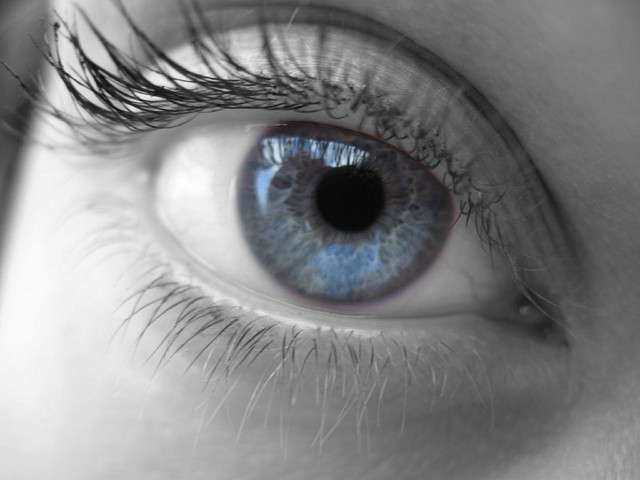
Photo credit: _StaR_DusT_ / Foter / CC BY
Michael said, “One of the teachers I have known and respected for a long time, the Taiwan food specialist Ma Lao-fe, emphasizes the importance of context, from a standpoint of health benefits in a meal.This teacher often stated that context is as important as or more important than food.
“The idea of connecting with family and friends, of having conversation, of the environment and surroundings of the meal is as important or sometimes even more important because these elements of a meal are nourishing too.”
This does not mean that one should be a food snob. Michael quoted the great master of French cuisine, Julia Childs, as saying, “On the road, the atmosphere might be MacDonald’s, because it is road food.”
Michael also recounted his teacher inviting Michael to eat in a variety of locations just to amp up the factor of atmosphere. To a park. To somewhere outdoors. For a couple trying to conceive, to a playground filled with children.
Think of it. The meal is not only what is on the plate. It is the surroundings. We take it in. We eat with our minds and hearts.
This is especially important for the patient with swallowing difficulties. Dysphagia patients really benefit from the practice of creating an environment of health and healing. It does not take much. It is an approach, an attitude.
My mom really appreciated it when I brought in roses from the garden in her favorite color, red, and let her smell the roses before she ate her meal.