“You might be a dysphagia therapist If…”

Removing that dried-to-the-palate sheet of sputum in one intact piece has, for you, become a sport.
I am so okay with mouths, y’all. They don’t gross me out one bit. If you’re reading this, odds are that you feel likewise.
Several nurses and physicians have confided in me that oral care makes them squeamish, that they’d rather drain a big sebaceous cyst or start an enema that clean a patient’s teeth. I, unlike these practitioners, have come to enjoy it. You know that hard, crusty sheet of sputum that forms on a patient’s hard palate when they have been mouth-breathing and NPO for four days? Well, I make a game of peeling it off in one intact piece. Same with the hard shell of sputum that dries to the dorsal surface of the tongue. I like to show it off to the nurses. Look what I did!
You go into pointing stance when you hear anyone in the hospital cough.
Are you overly-sensitive to the sound of someone coughing? If you are a dysphagia-treating SLP, the odds are good that you are.
I am conscious of every audible cough within the walls of the hospital. I notice every little cough that escapes the lips of my patients, obviously (it is a possible symptom of penetration/aspiration, after all), but I notice the coughs of everyone else, too: The patient’s wife as she sips coffee from the bedside recliner, for example. The volunteer chaplain as he strolls down the hall. The nurse at the nurses’ station who is entering her documentation into the computer. If anyone lets loose with an ack-ack that is above 50dB, I go on point like an English Setter.
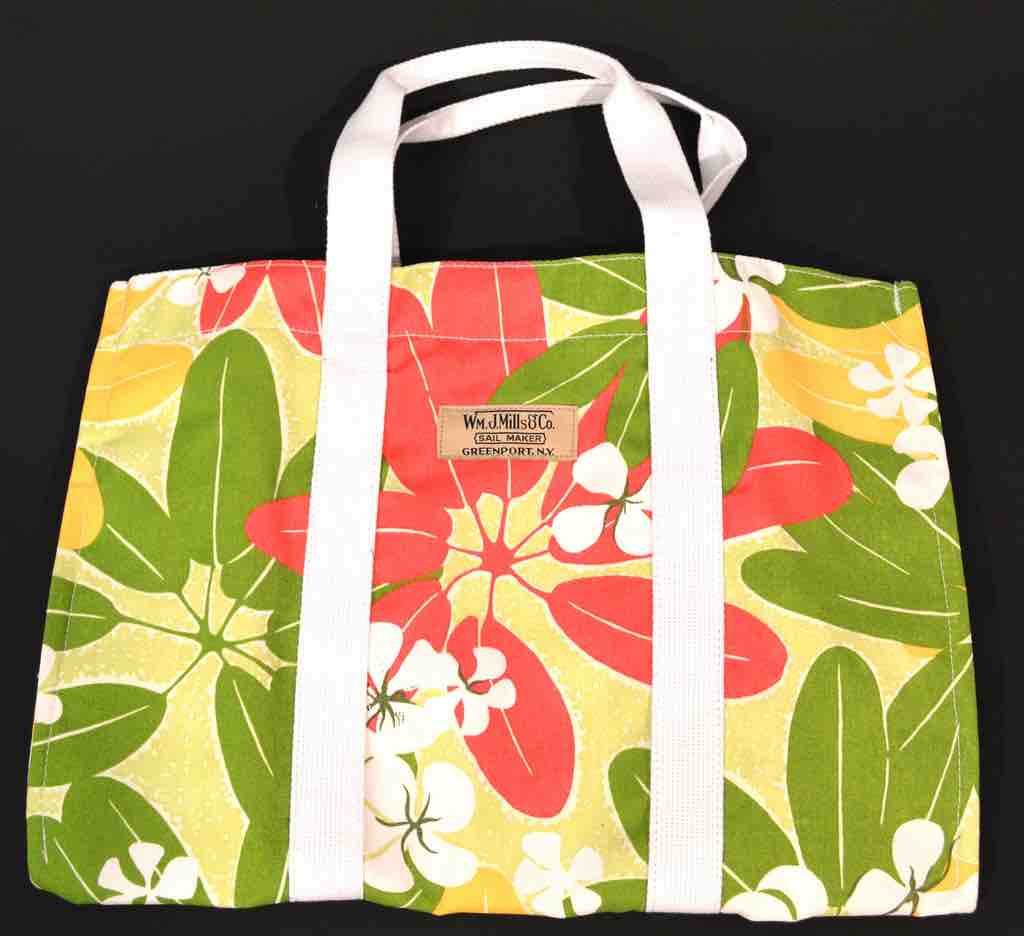
You carry a tackle box around at work.
Do you carry a big tackle box or tote bag around with you at work? I do. I catch a lot of flak about it from coworkers. What do you keep in there, anyway? they all want to know. I usually tell these nosey-Nellies that the contents of my tackle box are private because of HIPPA and that it is none of their business.
What is in my box? What isn’t in my box?! I want to be prepared for any and everything a patient might require, so like all good dysphagia therapists, I keep the following items close at hand: spoons, applesauce, pudding cups, crackers, fruit cups, packets of thickener, a gait belt, tongue depressors, an NMES unit + electrodes, lemon swabs, a pen light, blue food coloring, a few flash cards of everyday objects, a compass, a sextant, a bicycle bell, chop sticks, a flare gun, a clinometer, a maxi pad, a passport, a string of Christmas lights, a dog whistle, and season tickets to the opera. (Okay, I may be exaggerating, but not a whole lot.)
You have ever complimented anyone’s throat.
Do you ever catch yourself giving a patient a bizarre compliment about his/her anatomy? “Wow, the horns of your hyoid bone are really easy to palpate!”
These statements slip out of my mouth sometimes, but I generally try to keep them to myself. Patients never know how to take such a comment. “Is that…good?” they will ask cautiously.
Differences in anatomy, even if they aren’t clinically significant, are interesting when you’re looking at them, feeling of them and watching them function all day by way of flouroscopy. Some people are wine aficionados. For dysphagia therapists, it is the throat about which we are discriminating.
You have had a temper-tantrum about an insufficiently-elevated head-of-the-bed that was so bad, you had to go back and apologize to your coworker.
I love nurses. LOVE them. I have a tremendous respect for the skill and compassion of the nurses at my hospital, but so help me, when one of these fine healthcare workers offers my up-at-30 degrees patient a soda by straw, I can’t help but lose my cool a little. No excuses, nurses. I understand that the patient’s blood sugar is 300 and that meds need to be given quickly, but if you let this patient drink and take a pill in supine, you may inadvertently stack aspiration pneumonia (or worse) on top of the hyperglycemia. Apology accepted. Let’s hug it out. Still friends? (But seriously, up at 90 degrees. I told you that. I put a sign on the door. I wrote it in the chart. Ugh.)
You have accidentally thickened a load of laundry.
Do you come home with random hospital items in your pockets? Tongue depressors? Skid-resistant socks? The portable phone from your office?
I often have packets of thickener in my pockets. Sometimes I forget to check my pants and end up washing them. I do not have a nectar-thick cycle on my washer, so, well…let’s just say check your pockets and leave it at that, shall we?
When dining out, you prefer the seat facing the wall.
Do you watch the other diners in restaurants? Do you ever notice them struggle and then fight off the urge to leave your date or family so that you can modify these strangers’ main courses until they are a more-manageable, mechanical soft consistency?
I live and work in a very small town. Sometimes I see former patients out in restaurants. Once, there were three former patients in my line of vision. It took all the class and restraint I had (read: not a whole lot) to keep from interrupting their dinners with suggestions on more appropriately-textured entrees. It is their life. Their meal. I can’t micromanage them forever. (I can sit facing the wall, though, can’t I?)
You once sent your best friend a text message in the middle of the work day to gleefully announce: “I saw a bifid uvula this morning!”
Do you take joy in seeing an anatomical abnormality? A bifid uvula or perhaps some rockin’ tori?
This goes hand-in-hand with #4 on this list. Sometimes an interesting mouth makes my day. Sometimes I text my best friend (a PT) to tell her about something cool that I saw in the course of performing my duties. Is that sad? (Don’t answer that. Moving on.)
You resent cornbread.
Every geographic region has a culturally significant food that becomes challenging to swallow by the time a person reaches about 70 years of age. Have you noticed this? If you are an SLP who treats dysphagia, it is likely that you have. A Mexican SLP once told me that the most problematic food for her patients is rice. For my patients, that food item is cornbread.
I live in a fairly rural part of the south. Many of my patients have grown up eating a piece of cornbread with dinner every night. The trouble is, traditional southern cornbread, unlike the sweet, cake-like stuff they serve in restaurants, is very dry and crumbly. It is not unlike a sandcastle – precariously held together by a modicum of moisture and prone to crumble at the touch. “I get choked on cornbread” is the #1 thing I hear from an outpatient. Stop eating cornbread comes off to my patients as a hostile suggestion and is completely unrealistic, just as stop eating rice is unrealistic to my Mexican colleague’s patients, so I have taken to recommending they mix their cornbread with buttermilk or the juice from their pinto beans.
You can accurately guess (give or take 8 years) a person’s age based on the image generated by their noggin under fluoroscopy.
Have you ever gotten to do a Modified Barium Swallow study on a patient that was in his twenties? What beautiful teeth and spines these youngsters have!
The older patients get, the more interesting they look under flouro. Screws in the neck. Osteophytes. Surgical clips. The carnies at the county fair, the ones that guess your age, they could really knock it out of the park if they had the benefit of flouroscopy.
Thank you for reading. Please reach out to me in the comments section. I’d love to know there are more people out there who share my quirks.