Covid-land, NYC: Reflections from the front lines


When my hospital in NYC admitted the first New York case of COVID19 in the beginning of March, we felt uneasy—but nothing around us really changed, and we all went about our business as usual. Then in what felt like the blink of an eye- the COVID19 admissions started rolling in, the PPE guidelines started changing, and the streets of NYC started shutting down. We braced ourselves.
Then that first patient got extubated. And our SLP service was consulted for a dysphagia evaluation. We paused. There’s got to be data from China or Italy on what to do right? After reaching out to contacts abroad- we realized there really wasn’t information to guide us. Right around that time, CDC guidelines came out to avoid endoscopic procedures.
A month later, we are smack in the center of COVID-land and our SLP service is responding to consults left and right. I know that some are questioning if our service is essential in treatment of these patients. I will just say that at my hospital- SLP, PT, and OT are all hands on deck.
So how are we managing? What types of COVID19 patients are we seeing and how are they faring? What are we doing without objective assessment? I wanted to share some honest reflections to these questions.
How are we managing?
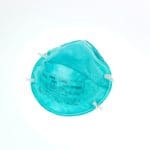
- PPE: For all COVID19 patient contact: every SLP is wearing an N95 respirator, with a surgical mask on top (for conservation of the N95), protective glasses, a face shield, gown, and gloves
- Staffing: Our hospital provides 7-day a week SLP coverage: We have staggered our work shifts from 5 short days to 4 long days in efforts to prevent office over-crowding, limit the number of days we need to commute on public transportation, allow more time to respond to lengthy consults, and have an additional day off for mental health.
- Consults: In our effort to reduce exposure and preserve PPE, we are carefully triaging each case and talking to the medical team first: is the patient ready for our evaluation? Can we make a reasonable recommendation (perhaps after chart review, discussion with the nurse, contact with the patient’s family or nursing home, etc.) without entering the room?
What types of COVID19 patients are we seeing?
Post Extubation
- We recently had what felt like the first wave of consults of patient post-extubation, and now it feels like a steady stream. Currently, our hospital system has over 750+ patients in the ICUs on ventilators. What are the trends with these post-extubation cases? There aren’t any! Some have an extensive past medical history, others have none. The length of intubation varies from 3 days to 3 weeks. We have evaluated patients aged 32 to 82. Some patients have been proned, others haven’t.
- Initially one thing remained the same though- we got consulted right after the tube came out. Our service is not performing FEES (and up until very recently, MBS)- so we educated our physicians on post extubation dysphagia considerations, and have developed guidelines that at the minimum- we wait at least 24 hours before assessment given the increased risk for laryngeal sensory deficits. We have also asked that NGTs remain or be placed upon extubation if it is anticipated that the patient will need immediate access to critical medications or is elderly with many comorbidities.
- What do these patients look like? Some have been aphonic, full of secretions, and seem peri-reintubation. Others patients are borderline- perhaps slightly dysphonic and weak but look like they have potential for some PO intake. We have used our bedside clinical judgement here. Yes we acknowledge this is subjective and we discuss the limitations with our physicians. We have initiated many patients on modified diets and thickened liquids. But if we can’t definitively rule out aspiration of thickened liquids, isn’t it safer to aspirate water? We recognize this, but sometimes have felt a consistent choking response to thin liquids just isn’t ok. We have been somewhat conservative with our diet texture recommendations and (like always) consider the patient’s comorbidities, hospital course, general presentation, etc.
- How are these patients faring? Looking back so far: some of those peri-reintubation patients were indeed reintubated, some passed away. Some of those patients fully recovered, we advanced their diet, and they returned home. Others have been discharged to SNFs or rehab on dysphagia diets.
- We now have access to MBS on a case by case basis and will reserve this for patients with a history that really suggests high risk for silent aspiration- like stroke, head and neck cancer, prior trach, or those with suspected vocal fold trauma post extubation that doesn’t resolve.
Hypoxia
- Our institution is treating hypoxia due to COVID19 with Non-rebreather masks (plus or minus nasal cannula), as opposed to high flow nasal cannula or BIPAP- in efforts to create a seal during oxygen delivery and reduce aerosol generation.
- But what about eating and drinking? Perhaps our most challenging battle has been educating medical teams about the implications of desaturating and increased work of breathing with NRB removal to eat and drink- by altering respiratory/swallow coordination and increasing aspiration risk.
- Our service has deferred consults received when a patient is requiring an NRB and recommending NPO- we will assess the patient when stable and weaned to nasal cannula. Some providers get it, some don’t. We keep in mind that some of these physicians are specialists now being asked to manage COVID patients and do our best to educate. In a preliminary look back of 27 consults that were deferred as the patient required an NRB at the time: 22 out of the 27 then expired. This would seem to support appropriateness of deferrals. But what about those patients we are not consulted on that eat/drink in this fashion and seem to do A-ok?
Altered Mental Status/Dementia
- Excluding ICU delirium- we have seen a significant amount of patients coming in with altered mental status in the setting of metabolic disarray from poor PO intake, or with lethargy in the setting of infection. We are frequently seeing this in the dementia population, and elderly patients with significant comorbidities.
- These cases are tough (and sad). From a safety perspective, it has seemed quite obvious that this patient whose mental status is significantly altered is at high risk for aspiration. NPO! But we realized that COVID19 is quickly tipping many of these patients over the edge.
- So we recently talked with our Palliative care team about early clarification of goals of care in regards to eating/drinking when families discuss DNR/DNI. We are asking about the patient’s prognosis, and if it is poor- suggesting teams consider liberalizing to comfort feeds to align more with the patient’s goals.
Other Diagnoses
- Stroke: as I write this, more and more literature is coming out about potential neurological consequences of COVID19. We have continued to see stroke patients, as well as patients with recrudescence of their old stroke symptoms in setting of the infection.
- Head and Neck Cancer: We have had two laryngectomees in house with COVID19. As our ENT floor had already turned into a COVID unit- these patients were admitted to random floors in the hospital. Most of our involvement here was education to nursing/medical staff on TL considerations and stoma care. Fortunately neither of these patients had TEPs! We sent information/care packages to all local TLs with TEPs with emergency items like a red rubber catheter. We are using telemedicine now for virtual management of patients undergoing radiation.
- Trachs: We are now tracheostomizing patients after significantly prolonged intubation. We are in ongoing discussions with our surgeons and critical care teams to discuss candidates and what post trach care and SLP intervention will look like.
This is a broad glimpse into SLP/COVID-land at my hospital-it is definitely not exclusive. In some ways- treating COVID19 patients has been no different than treating other cases. We are using clinical judgement, critical thinking skills, and communicating with medical teams- as we always have done. We are still faced with the same challenges: NPO vs comfort feeds? Aspiration vs dehydration/ hypernatremia risk? Every patient is unique- we make recommendations on a case by case basis.
But in other ways- our practice has drastically changed to accommodate the COVID19 situation. We are relying heavily on our bedside skills given the lack of access to instrumental assessment. We are deferring assessments until we feel the patient presentation is optimized. We stopped ambulatory appointments very early on and have transitioned to televisits for our outpatients. We are now admitting COVID patients to acute rehab!
This has been a challenging experience so far, and we know that in NYC at least, it is far from over. Our team luckily has the support of our institution behind us and our safety considerations- providing shuttles to work, ramping up efforts to supply PPE, providing meals, and being transparent with updates. Our department meets frequently (socially-distanced of course!) to discuss case management, reflect on our data, and support each other.
In sharing some insight, the hope is to open the doors for discussion, ideas, collaboration, etc. And if anyone knows how to talk under an N95 without getting winded, please share!