
The Heart of dysphagia: Thoughts on the cardiopulmonary system and its effects on swallow function from a winded, thirsty SLP on a treadmill

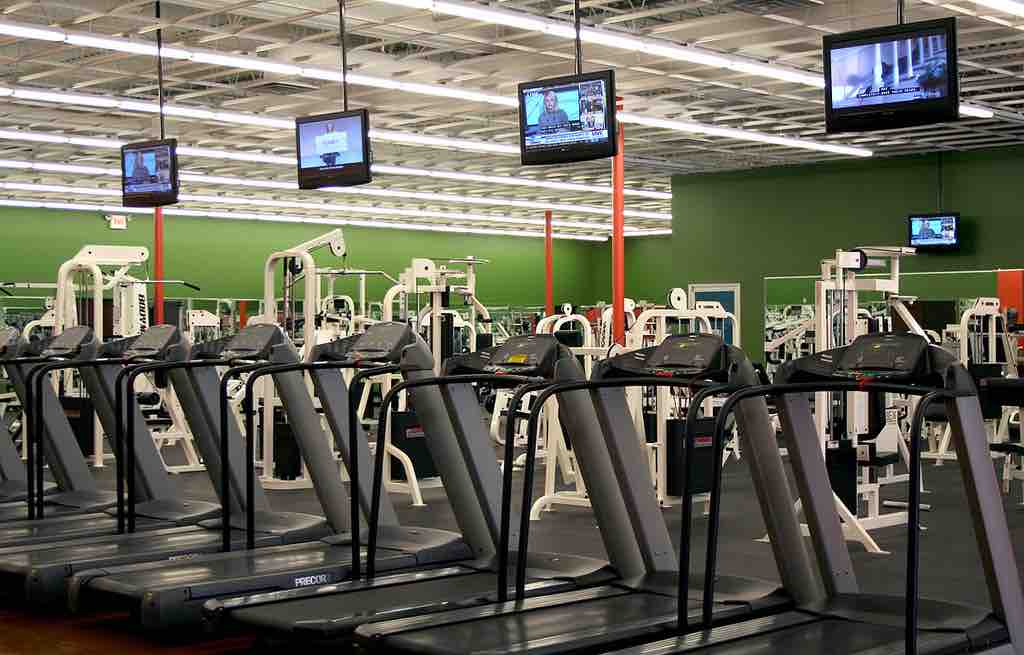
Valentine’s Day is upon us. Lately I find that I am thinking quite a bit about hearts. No, not those hearts.
I am a bit of a runner. I don’t aspire to run a marathon or anything. My fitness goal is really just to make sure that the word “panis” never appears in my medical records
Up until recently, my workout routine was to jog two miles at a 13-minute/mile pace, stretch, pat myself on the back for having “gone running,” and eat three servings of Cheetos. Just being honest with you. Lately, though, I have been pushing myself.
I have decided to run a 10K in April. To prepare, I have been challenging myself to run at a swifter pace and for longer distances. At this point in my training, I can run at an 11-minute/mile pace for three miles. I can do this without stopping to walk. What I cannot do, not easily, is drink.

Here is my sports bottle. It takes a pretty effortful suck to get water out of this bottle. I am sure this is by design, a feature that decreases leaks, but I hate it. When I am running at the pace described in the above paragraph (and keeping in mind that I am a little on the chubby side and not the least bit athletic), my heart rate is at or above 150 beats per minute. The treadmill doesn’t have a respiration rate monitor, but obviously my breaths-per-minute is crazy-high. Coordinating breathing and swallowing, while gasping for air a gazillion times per minute, is tough enough. Doing it while sucking on the sports bottle is basically impossible.
Breathing, sucking and swallowing are physiologically incompatible behaviors. Under normal circumstances, we coordinate them seamlessly. We breathe somewhere between 16 and 20 times per minute. While eating or drinking, we inhale, there is a period of apnea while we swallow (i.e. 1.5 to 2.5 seconds in duration), and then we exhale. Conscious thought only comes into play when one of these behaviors is compromised.
Compounding my difficulty coordinating my breathing/sucking/swallowing while drinking from a sports bottle while at my anaerobic threshold is the need for cervical extension. That 90 degree angle over which we SLPs obsess – it doesn’t work with this sports bottle. Fluid has to be at the valve, so the bottle (and thus my head) must be tilted as the volume decreases in order for me to suck the water out of the spout. This sets me up, at least under the altered state of high-intensity exercise, for premature spillage.
Is this clear? Are you surprised that I have stopped bringing this bottle to the gym?

This is my favorite water bottle. It has a perfectly-sized spout: not so big that I get flooded, and not so small that I have to suck.
A second feature I like about this bottle is that it has a small lip much like a cup. This gives me a little more control and keeps me from spilling while I drink.
One thing I have caught myself doing, even with this bottle that I love, is holding the water in my mouth. Not for long, mind you, but for an extra second or two. As noted, we typically swallow directly after inhalation, so I hold it in my mouth until I have inhaled, and then I swallow. I don’t want to inhale directly after the swallow. We are back on the breath coordination issue.
If I did anything for a living other than treat dysphagia, I probably would have put little to no thought into this drink ware business. I would have decided I preferred one bottle over another, and that would be the end of it. Since I do treat dysphagia, I think the process of choosing a water bottle has given me a lot of insight as to what my (your) patients are having to deal with on a daily basis.
Think about these patients we see in the acute care setting who have been admitted with COPD exacerbation. Think about the hypercapnic patients we see. Why are they getting SLP consults? They didn’t have strokes. They should swallow fine. Right?
These respiratory patients are like me when I try to drink from a sports bottle during high-intensity cardio. They can’t stop breathing long enough to suck and swallow. Look at their monitors and note their respiratory rate. If swallow apnea is about 2 seconds in duration and these patients are breathing over 30 times per minute, how well are they going to swallow? Have you noticed how these patients point to their spouses when you ask them questions about their symptoms and medical history? They cannot answer for themselves. They are too short of breath to speak. They are similarly too short of breath to safely meet their needs with regard to nutrition and hydration.
I don’t know that we talk enough about cardiac and pulmonary issues in our field. The cardiopulmonary system, when compromised, can have a real impact on the safety of a patient’s swallow. (Which impacts their nutrition, hydration, and ability to take medication. Which impacts their rate of healing and risk for urinary tract infection. Which impacts their pulmonary status. Around and around, like the belt on the treadmill.)
When the nurse tells you these respiratory patients are coughing when they drink, find out what kind of containers they’re using. My hospital gives everyone a sturdy, insulated 32-ounce cup with a tight lid and a long, bendy straw that is as big around in diameter as my thumb. It is a nice cup, and I’m sure the ortho patients appreciate sipping on it all day without having to request a refill, but it is kind of a nightmare for my patients and for lots of reasons – not the least of which that it, when full, weighs two pounds!
In the case of the COPDers, maybe all they need is to be sitting up and drinking from a spouted coffee cup. Done and done. Who knows? Every patient is different. I guess the point I am trying to make is that doing trials with different cups can sometimes be just as clinically significant as doing trials with different viscosities. The drink ware a patient uses affects the volume of the bolus he takes in, and the volume of an aspirate plays into the likelihood of aspiration leading to pneumonia in as much as viscosity and pH.
Another trend I have noticed with some of the COPD patients is that they report choking more frequently at the very beginning of the meal but that it gets better as time goes on. When I hear this, I ask what happened before they sat down to eat. Often they tell me they walked from the sofa to the kitchen table. They are short of breath from the exertion of walking from one room to another. An effective behavioral change, in this case, might be to simply sit for a couple of minutes so that breathing can regulate.
What about patients that come off of BiPAP only to eat? Even if they have no oral stage dysphagia, they may need a modified diet. It seems logical to me, probably to you, (and probably to no one else on staff), that anyone struggling with respiration so desperately that they require BiPAP is not going to fare well trying to chew and swallow salad or a piece of hospital-prepared grilled chicken. Not to mention the dry mouth…
Pay attention to the way you drink next time you’re doing cardio. Is there anything you do differently? Do you step off the belt of the treadmill and let your breathing slow before you drink? Can you imagine what it would be like if breathing was always a struggle – if there were no way to step off that belt?